
Nanjing Bidun Environmental Protection
Showcasing our successful implementations and partnerships in environmental protection solutions
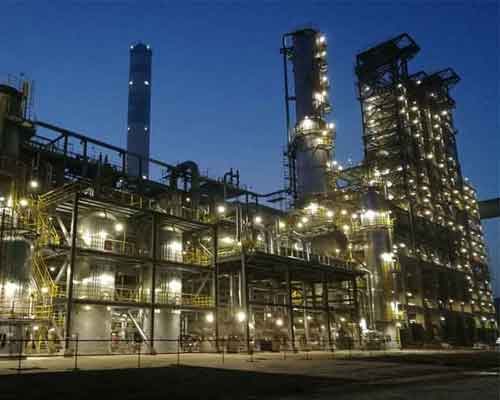
Hengli's 20 million ton/year refining and chemical integration project is a major private refining and chemical project listed in documents of the State Council, as well as a strategic project for the new round of Northeast China Revitalization.
It has set industry records in the global petrochemical sector for the fastest engineering construction speed, full-process commissioning and startup speed, and production capacity achievement speed, becoming a benchmark for high-quality development in the industry.
Domestically, Hengli has adopted the ebullated-bed residue hydrocracking technology for the first time, with a total hydrogenation capacity of over 27 million tons and an annual aromatics production capacity of 5.2 million tons, enabling the most efficient processing and fullest utilization of crude oil.
The Hengli Petrochemical project produces a wide range of high-quality products including:
Hengli Group has an annual PTA (Purified Terephthalic Acid) production capacity of 17 million tons, making it one of the world's largest PTA production bases. Among its facilities, the PTA production base in Hengli (Dalian Changxing Island) Industrial Park has an annual capacity of 12 million tons, while the PTA project in Hengli (Huizhou) Industrial Park has an annual capacity of 5 million tons. These facilities rank among the world's PTA plants with the largest current capacity, most advanced process technology, and most comprehensive supporting facilities.
The projects adopt internationally advanced Invista (U.S.) technology and feature "large investment scale, strong production capacity, high process standards, and low energy consumption". They have set multiple records in the global PTA industry and been recognized as among the first batch of national-level "Green Factories".
To fully leverage the advantages of refining-chemical integration, Hengli (Dalian Changxing Island) Industrial Park has also constructed a 1.5 million ton/year ethylene project and a 1.8 million ton/year ethylene glycol project. Adopting advanced process technologies from Technip and Scientific Design, the projects use naphtha and dry gas produced by the refining-chemical project as raw materials, and have built the world's largest-scale plants for ethylene, ethylene glycol, and styrene, among others.